
The right to education
In the landmark civil rights case of Brown v. Board of Education, 347 U.S. 483 (1954), the U.S. Supreme Court held that a separate education for African-American children was not an equal education, providing an important precedent for an integrated public education for all citizens. Unfortunately, it would take nearly 20 years for this precedent to be applied to children with disabilities.
Brown consolidated five cases brought in various states across the country, challenging the exclusion of African American children from schools attended by white children in the same district. The school districts defended these practices by reference to the “separate but equal” standard, announced by the Court in Plessy v. Ferguson, 163 U.S. 537 (1896), in upholding “whites-only” railroad cars. In Brown, the Supreme Court unanimously overturned Plessy, holding that segregating children by race in public schools violated the Equal Protection Clause of the Fourteenth Amendment.
Chief Justice Earl Warren wrote: “We conclude that in the field of public education the doctrine of ‘separate but equal’ has no place. Separate educational facilities are inherently unequal …”1
This decision provided the constitutional foundation for parents of children with disabilities and disability rights activists to press for equal educational opportunities for all children, including those with developmental and other disabilities.

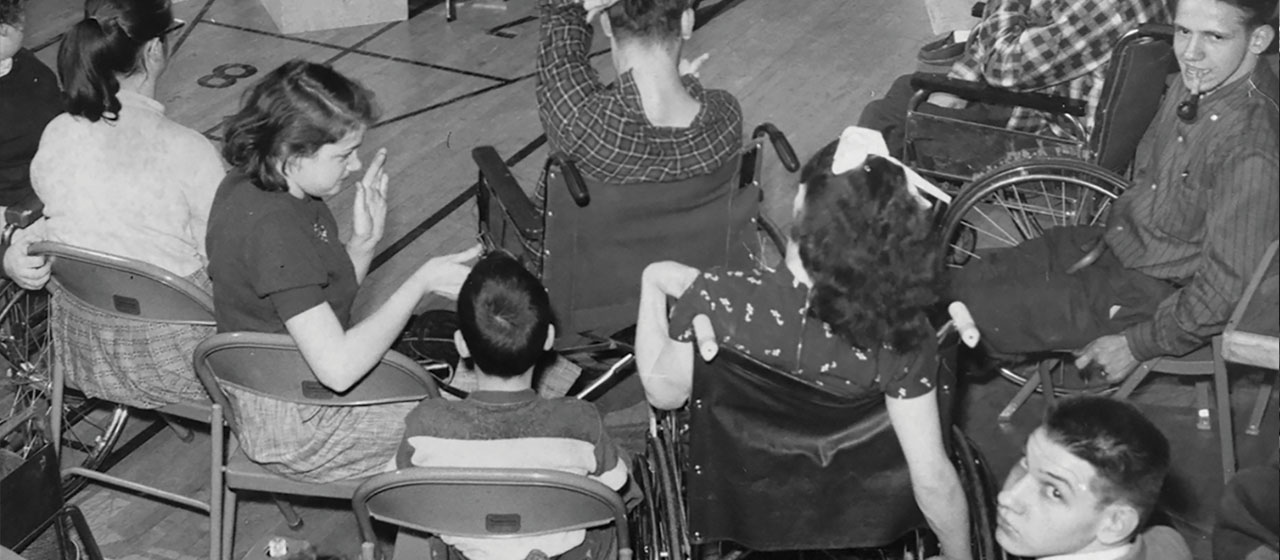
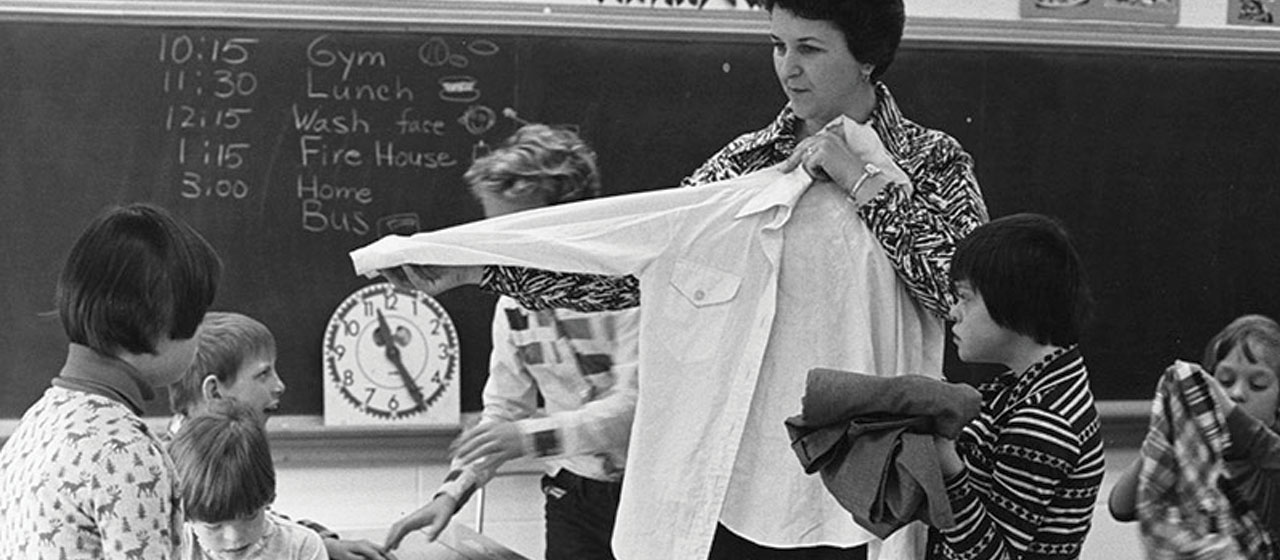
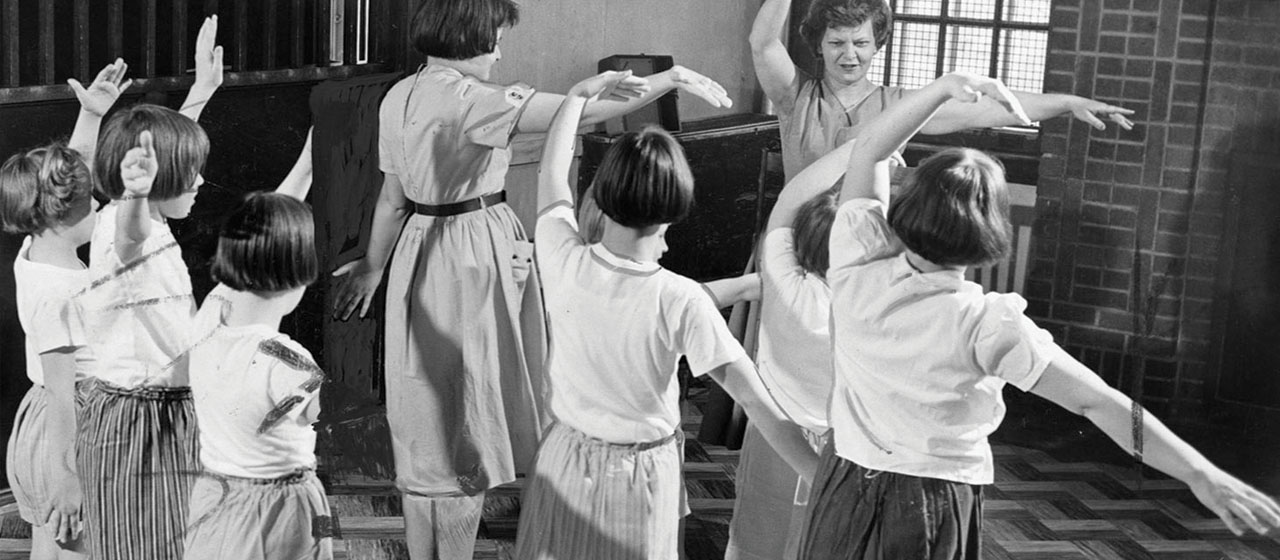
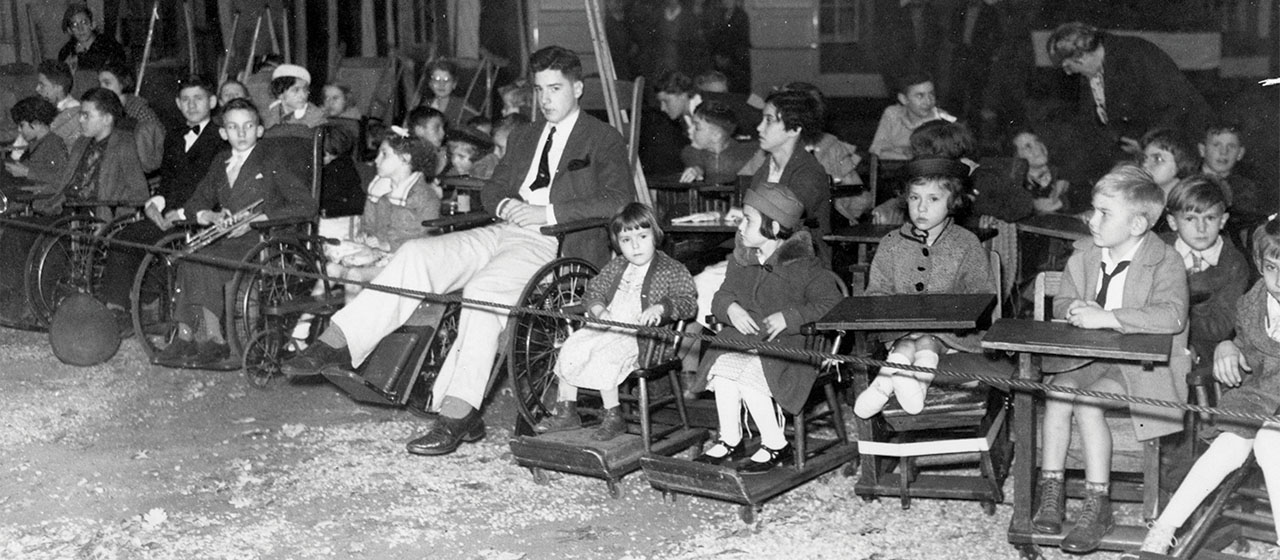
EXTENDING BROWN TO CHILDREN WITH DISABILITIES
Two critical cases in the early 1970s—Pennsylvania Arc v. Commonwealth of Pennsylvania and Mills v. Board of Education—addressed the issue of education for children with disabilities. At the time, millions of children with disabilities were refused enrollment in public schools, were inadequately served by public schools, or were sent to institutions.
In both landmark cases, the Courts interpreted the Due Process Clause of the Fourteenth Amendment to give parents specific rights, struck down local laws that excluded children with disabilities from schools, and established that children with disabilities have the right to a public education.
PARC V. COMMONWEALTH OF PENNSYLVANIA, 334 F. SUPP. 279 (E.D. PA 1972)
In 1954, early in his tenure as executive director of the then-named National Association for Retarded Children, Dr. Gunnar Dybwad called attention to the Supreme Court’s decision in Brown v. Board of Education. He suggested that the case had enormous possibilities for children with disabilities as well.
In 1971, Thomas K. Gilhool, the attorney who represented the Pennsylvania Arc (PARC), relied on Brown in his class action suit filed on behalf of 14 children with developmental disabilities who had been denied access to public education in Pennsylvania, under a state law that specifically allowed schools to exclude children who had not reached a “mental age of five years” by the time they should be enrolling in first grade. The plaintiffs argued that this exclusion violated their rights under both the Equal Protection Clause and the Due Process Clause of the Fourteenth Amendment.
In connection with a consent agreement approved by the court, a three-judge panel of the District Court for the Eastern District of Pennsylvania enjoined Pennsylvania from denying any child up to age 21 admission to a public school program “appropriate to his learning capacities”, or from having his educational status changed without first being notified of and provided the opportunity for a due process hearing.
The Consent Agreement stated: Expert testimony in this action indicates that all people with intellectual disabilities are capable of benefiting from a program of education and training … It is the Commonwealth’s obligation to place each child in a free, public program of education and training appropriate to the child’s capacity.2
It also said: Placement in a regular school is preferable to placement in a special school class, is preferable to placement in any other type of program of education and training.3
MILLS V. BOARD OF EDUCATION, 348 F. SUPP. 866 (D.D.C. 1972)
Mills expanded the impact of the PARC case beyond children with developmental disabilities. The Mills class action lawsuit was brought in 1972, the same year as the PARC case, on behalf of seven school-age children who had been denied placement in a public educational program for substantial periods of time because of alleged mental, behavioral, physical, or emotional disabilities. The plaintiffs sought an injunction on the grounds that they had been denied their constitutional right to Due Process.
The District of Columbia government and school system conceded that it had the legal “duty to provide a publicly supported education to each resident of the District of Columbia who is capable of benefiting from such instruction”4 but argued that it was impossible to do so because they lacked the necessary financial resources. The Court held that no child could be denied a public education because of “mental, behavioral, physical, or emotional handicaps or deficiencies.”
The court further noted that defendants’ failure to provide such an education could not be excused by the claim of insufficient funds, stating: “If sufficient funds are not available to finance all of the services and programs that are needed and desirable in the system, then the available funds must be expended equitably in such a manner that no child is entirely excluded from a publicly supported education consistent with his needs and ability to benefit therefrom. The inadequacies of the District of Columbia Public School System, whether occasioned by insufficient funding or administrative inefficiency, certainly cannot be permitted to bear more heavily on the ‘exceptional’ or handicapped child than on the normal child.”5
SUBSEQUENT DEVELOPMENTS IN SPECIAL EDUCATION LAW
Twenty-seven federal court cases followed the PARC and Mills decisions, leading to the pressure of federal laws guaranteeing a public education for all children. In 1975, the Education for all Handicapped Children Act, now called the Individuals with Disabilities Education Act (IDEA), codified the right to a free, appropriate public education for all students, including those with severe disabilities. IDEA requires all public schools accepting federal funds to provide equal access to education to children with physical and mental disabilities. It also requires that each child have an “individualized education program” (IEP) that is implemented in the “least restrictive environment” possible. However, the meaning of “appropriate” education is an ongoing source of controversy and litigation. Under IDEA, states are required to develop plans with the following components:
- Provision of “full education opportunities” to all;
- Due process safeguards to aid parents in challenging many decisions regarding the education of their children;
- A guarantee that children with disabilities will be educated to the fullest extent possible;
- Procedures to assure that tests and other materials used to evaluate a child’s special needs are not culturally or racially biased; and
- Evaluation of all of the state’s children with special needs.
SUPREME COURT OF THE UNITED STATES
Board of Education v. Rowley, 458 U.S. 176 (1982)
In the first opinion by the Supreme Court interpreting the IDEA, the Court affirmed the IDEA’s requirement that students with disabilities receive a “free and appropriate public education (“FAPE”) requires schools to provide specialized instruction and services which are individually designed to provide education benefit” to students with disabilities. However, it declined to interpret the IDEA to require schools to provide services designed to permit a student to achieve her full potential, provided some educational benefit is provided. Under this standard, a deaf student who was not provided the sign language interpreter which her parents requested was receiving a FAPE because she did receive enough support to enable her to achieve passing marks and advance from grade to grade.
Endrew F. v. Douglas County School District RE-1, 580 U.S. 386 (2017)
Thirty years later, the Supreme Court overturned a line of cases interpreting Rowley as being satisfied as long as the services are reasonably calculated to provide some benefit rather than no benefit, even if the benefit is merely de minimis. Instead, the Court stated that “When all is said and done, a student offered an educational program providing ‘‘merely more than de minimis’’ progress from year to year can hardly be said to have been offered an education at all.”6 Rather, “To meet its substantive obligation under the IDEA, a school must offer an IEP reasonably calculated to enable a child to make progress appropriate in light of the child’s circumstances.”7
VIDEOS
VIDEOS
Leading Special Education Expert Dan Stewart Discusses Education Rights for Students with Disabilities
From The Minnesota Governor’s Council on Developmental Disabilities
Dan Stewart served as the Legal Director of the Minnesota Disability Law Center (MDLC). Before joining MDLC, Dan practiced with a private law firm and with the state Department of Education. He also founded the University of Minnesota Law School’s Special Education clinic. In addition to being an attorney, Dan has a Master’s degree in education administration, and a PhD in social work. In this video, Dan answers questions about Individualized Education Programs (IEPs), Section 504, and behavioral supports, as well as eligibility criteria and updates to special education law. He provides outreach and training sessions to a wide variety of national, regional, and local audiences.
